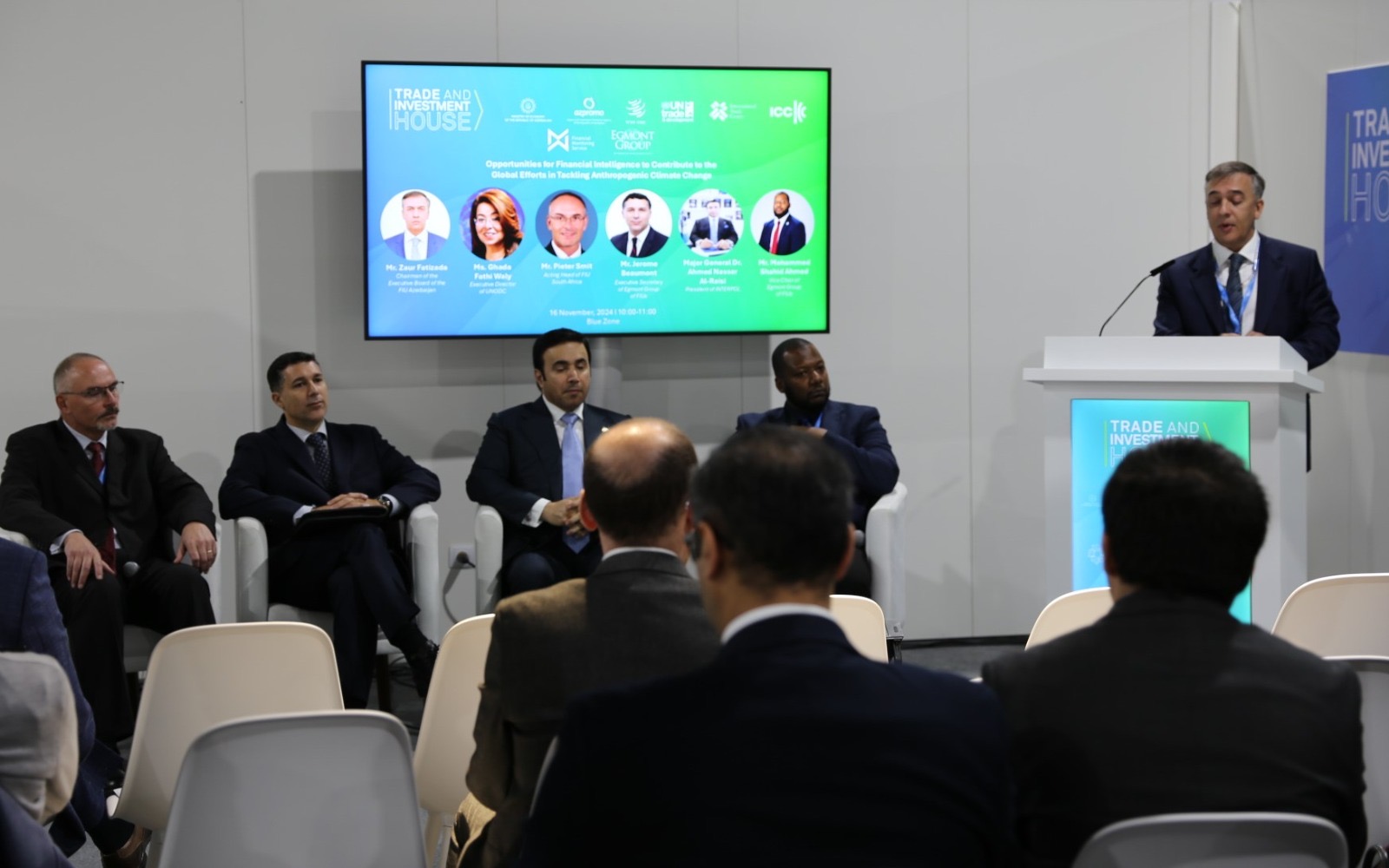
The Financial Monitoring Service (FMS) of Azerbaijan, in collaboration with the Egmont Group, organized two impactful panel discussions at COP29. The sessions focused on “Leveraging Financial Intelligence to Combat Anthropogenic Climate Change” and “Strengthening the Role of Financial Intelligence Units in Fighting Environmental Crimes.” The event welcomed 40 participants, including leading global experts and decision-makers.
During the first session, speakers explored critical issues such as the laundering of proceeds from environmental crimes, financing terrorism, and fostering international cooperation in finance, investment, and trade to address these challenges. Discussions also delved into the impacts of environmental crimes and global strategies for mitigation.
Mr. Zaur Fatizada, Chairman of the Executive Board of FMS, and Ms. Ghada Fathi Waly, Executive Director of the United Nations Office on Drugs and Crime (UNODC), shared valuable insights on the role of financial intelligence in tackling global climate challenges. The session was moderated by Mr. Mohammed Shahid Ahmed, Deputy Chair of the Egmont Group, and featured high-profile speakers, including Mr. Jerome Beaumont, Executive Secretary of the Egmont Group; Mr. Ahmed Nasser Al-Raisi, President of INTERPOL; and Mr. Pieter Smit, Executive Director of the South African Financial Intelligence Centre.
The second session, moderated by Mr Azer Abbasov, Deputy Chairman of the Executive Board, focused on the detection and prevention of environmental crime networks by Financial Intelligence Units. Panelists emphasized the importance of secure platforms for the Egmont Group’s member FIUs and highlighted the critical role of public-private partnerships and collaboration with law enforcement agencies. Speakers included Mr. Fuad Aliyev, Director of FMS’s Cooperation Department; Mr. Fabrizio Fioroni, UNODC expert; and Mr. Pieter Smit.
This landmark event marked the first instance in COP history where financial intelligence units took the lead in addressing the laundering of criminal proceeds and countering the financing of terrorism, reflecting a growing recognition of their essential role in combating environmental and climate-related crimes.


